
Muskogee Release Dates Explained
Three dates answer three different questions. A parole eligibility date is the first point when a person may be considered under the governing rules. A projected release date, often shown as PRD in Oklahoma parole material, is an administrative estimate based on sentence structure, jail credit, earned credit, and known limits. An actual release date records the completed custody event. Only the last one proves that the custodian carried out a release or handoff.
Pretrial custody works differently. Someone held at Muskogee County Jail before judgment has no sentence from which to compute a discharge date. Bond, a dismissal, a release order, a plea, another hold, or transfer can change custody. A judge’s order may authorize release, yet jail processing and a detainer can delay or redirect the exit. For a sentenced person, computation may be possible, but the result remains subject to the sentence record and later events.
- Parole eligibility date
- The first date when parole review may be available under controlling law.
- Projected release date
- A changeable estimate based on the agency’s current sentence calculation.
- Actual release date
- The recorded date when the custodian completed release or transfer.
- Detainer
- A request or authority that can send the person into another custody system.
Find a Muskogee Release Date
Begin with the authority that holds the person. The MCSO roster covers current local jail custody. ODOC covers state sentences, including people at Jess Dunn Correctional Center and Dr. Eddie Warrior Correctional Center. The Oklahoma Pardon and Parole Board, or PPB, publishes parole dockets and results. A federal, tribal, or immigration hold requires that system instead. One name may cross more than one channel.
Use this sequence to locate the most reliable Muskogee County projected release date without treating a tentative field as final.
- Identify whether the person is pretrial, serving a county jail sentence, or serving an ODOC sentence. Use the court case and current custodian, not the building alone.
- For an ODOC case, search the official offender locator by DOC number when possible. Record only the status, location, sentence, and date fields the live result displays.
- Open the PPB docket and results index. Search the relevant PDF for the name or DOC number and read PRD, PE DATE, proceeding type, count, and Board action together.
- For a county sentence, ask MCSO for its own computation and ask the Muskogee County Court Clerk for the judgment, sentence, jail credit, or later modification.
- Check for consecutive counts, revocation, parole conditions, and holds. Then confirm the actual release with the custodian after the event occurs.
The public ODOC search is not confirmed to expose a projected-release-date field. ODOC also says an individual release date is tentative and treats that information as confidential absent an identified legitimate need. A public search result remains useful for identity, status, and sentence context, but PPB dockets are the verified public channel where PRD and PE DATE headings appear for relevant cases.
Note: The Muskogee County release search helps identify the proper custodian before any projected date is interpreted.
Muskogee Parole Date Records
PPB organizes dockets and results by year and month. The July 2026 results format confirms fields for inmate name, DOC number, county, count and crime, sentence date, term, parole eligibility date, projected release date, Board action, case number, and total sentence length. Search the PDF by DOC number or name, then confirm that the row matches the right count and proceeding.
The month-indexed PPB page shows how dockets and results are separated:
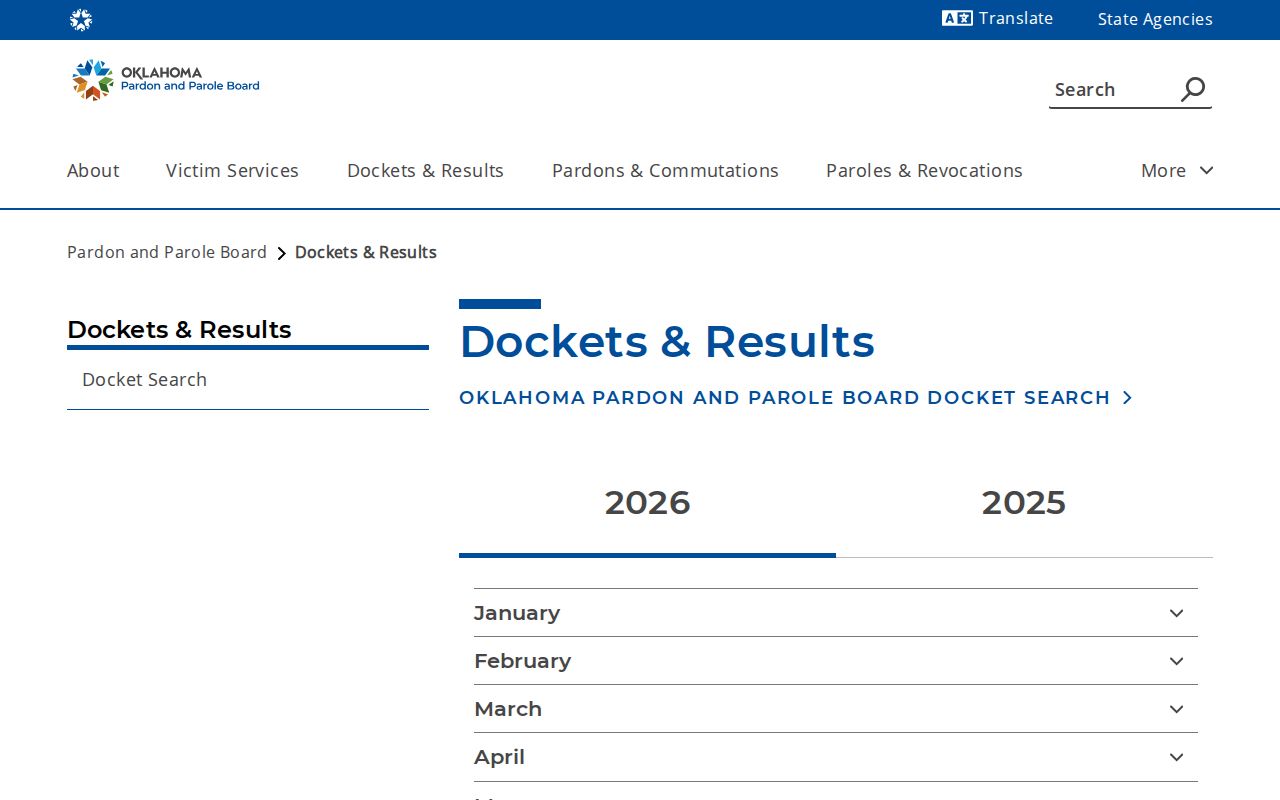
The page is the durable starting point because a future month may have a docket but no result until the meeting occurs.
Board action must be read literally. “Passed to Stage II” is not a final grant. “Recommend by Board, Parole to Street” can still require further action and release planning. “Parole to Detainer,” “Parole to Consecutive Sentence,” or a condition tied to a program does not mean immediate community release. ODOC status and the actual custodian supply the next confirmation.
Muskogee Release Dates and Credits
Oklahoma earned credits for ODOC sentences arise under 57 O.S. §138. Each earned credit equals one day of incarceration. Monthly reductions depend on an assigned class level unless another law controls. Credits may be taken through the discipline process and restored under policy. Work, education or program participation, conduct, hygiene, and care of the living area can affect classification.
The statutory monthly levels differ by criminal history. For a person who has ever been convicted or adjudicated of a felony listed in §138(E), the Class 1 through Class 4 rates are zero, 22, 33, and 44 credits. For a person without a listed felony, the rates are zero, 22, 45, and 60. A life sentence receives no earned-credit deduction. Other statutory exclusions also apply. These figures explain the framework, but they cannot safely calculate one person’s date.
| Calculation input | Why it matters |
|---|---|
| Sentence start and jail credit | Sets the base and credits time already recognized by the judgment or agency |
| Concurrent or consecutive counts | Controls whether terms overlap or run one after another |
| Monthly class history | Changes the earned-credit rate across the sentence |
| Achievement credits and losses | Can add, remove, or restore credits under law and policy |
| Mandatory minimum | May prevent credits from reducing custody below a legal floor |
Good-time note: Use the current statute and the person’s official calculation sheet. Sentence length alone does not produce a reliable release date.
Muskogee 85-Percent Release Rule
Oklahoma’s 21 O.S. §13.1 applies an 85-percent incarceration floor to the offenses enumerated in that statute. It restricts parole consideration and prevents earned or other credits from reducing service below that floor. The rule is not universal. It does not apply merely because a charge sounds serious, and an arrest charge may differ from the offense of conviction.
The exact statute, offense date, plea or verdict, count, and version of the law matter. The current list includes categories such as specified homicide, robbery, sexual, child, arson, burglary, trafficking, and other serious offenses. Copying the list into a simple calculator would mask amendments, renumbering, a plea to another count, or a later vacatur. Read the judgment and live statute instead.
The OSCN statute search provides the official path to both earned-credit and 85-percent provisions:
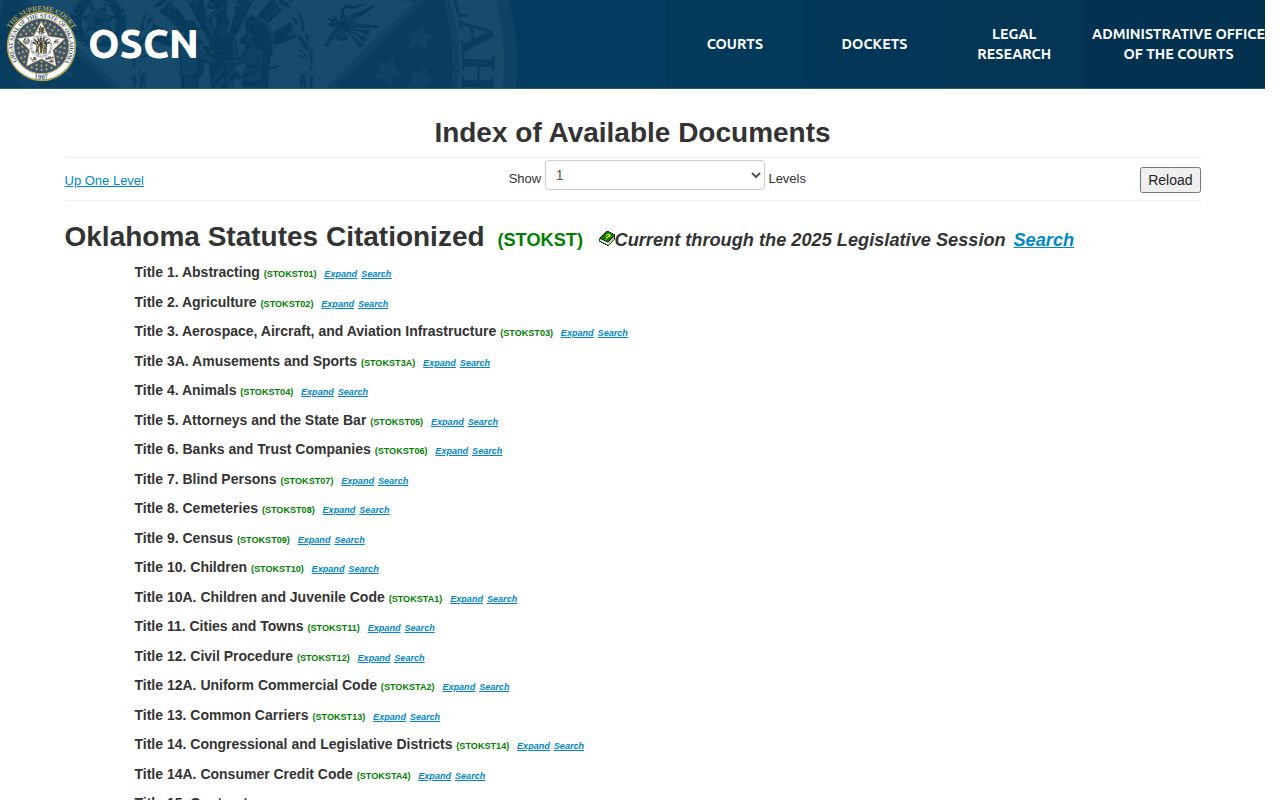
The statute text supplies legal limits, while ODOC’s individual calculation supplies the changing date.
Note: An 85-percent rule limits eligible sentences; it is not a shortcut for calculating every Muskogee County release date.
Muskogee Parole Eligibility Chronology
Parole eligibility under 57 O.S. §332.7 changes with the offense date. For crimes before July 1, 1998, the statute contains older matrix-era alternatives. For crimes from July 1, 1998 through October 31, 2018, the general point is one-third of the sentence, subject to exclusions and other laws. For crimes on or after November 1, 2018, the general point is one-fourth of the imposed sentence or consecutive sentences, again subject to controlling limits.
Those general fractions do not override §13.1, life without parole, other mandatory terms, or rules tied to violent offenses. Administrative parole has its own exclusions. The statute also addresses jail credit and consecutive terms, and permits consideration shortly before eligibility in specified circumstances. A sound Muskogee projected-date check therefore starts with the sentence date and conviction statute before any fraction is considered.
Eligibility is only a chance for review. A docket date, Stage I vote, Stage II review, recommendation, grant, certificate, release plan, and physical exit are separate events. That sequence explains why two public documents can show a favorable parole step while the person remains in ODOC custody.
Why Muskogee Release Dates Change
A projected date is recalculated as sentence facts change. Some events affect the amount of time credited. Others change the destination without changing the sentence itself. The official record should identify which kind of change occurred.
| Factor | Possible effect | Best source |
|---|---|---|
| Class level, credit loss, or restoration | Moves the estimate as earned-credit totals change | ODOC calculation and records officer |
| Jail credit or sentence modification | Changes the recognized start or term | Judgment, court order, and ODOC record |
| Consecutive sentence | Requires another term before final discharge | Judgment and ODOC sentence record |
| Parole action or condition | Changes the release route or delays implementation | PPB result and ODOC status |
| Detainer or other sovereign hold | Causes a handoff instead of community release | Custodian and receiving authority |
| Revocation or misconduct | Can add custody time or remove credits | Court, supervision, and ODOC records |
Muskogee County custody can involve state, tribal, federal, and immigration authorities. A person may leave the county jail or an ODOC institution on the projected day but enter another authority’s custody. The first agency’s actual release record is accurate about its own custody episode, yet it does not establish freedom from all holds.
Muskogee County Jail Date Computation
No verified Muskogee County good-time schedule, automatic weekend adjustment, standard release hour, or routine holiday-release rule was found. ODOC’s §138 class-credit table must not be copied into a county jail formula. For a local sentence, ask MCSO Records for the computation used in that case and ask the Muskogee County Court Clerk for the judgment, jail credit, later modification, or release order.
If the expected date falls on a weekend or holiday, contact the jail and ask what authority and practice govern that sentence. Do not assume release will move to Friday or Monday. The current MCSO roster can establish whether the person is still shown locally, while the jail’s operational record supplies the actual release time.
Muskogee County Jail
122 South 3rd Street
Muskogee, OK 74401
918-682-7851
Ask about the custodian and local sentence record.
Muskogee County Court Clerk
200 State Street, second floor
Muskogee, OK 74401
918-682-7873
Monday through Friday, 8:00 a.m. to 4:30 p.m.; open at noon.
A pretrial detainee has no computed sentence date. In that case, review the court docket for bond, dismissal, plea, or release orders and check MCSO for completed processing and any transfer.
Confirm Muskogee Actual Release
After a projected date passes, look for the actual custody event. For MCSO, request the booking and release record with the completed date, time, reason or code, and destination if recorded and public. For ODOC, request the final discharge, release, or status-change record. Closed Records is the better route for an older state discharge because the working monthly release-date report may be purged after discharge even while the closed offender file remains.
Oklahoma VINE can provide a status alert for participating county and state custody, but it may lag and does not certify the reason. PPB also warns that VINE is not its parole-notification program. The Muskogee County VINELink check is useful for a pending custody event, while the jail, ODOC, court, and PPB records explain what legally and physically occurred.